Introduction
Before large cryptocurrency exchanges became widely available, buying and selling Bitcoin often happened directly between individuals. One of the platforms that enabled this type of trading was LocalBitcoins, a peer-to-peer marketplace launched in 2012.
Instead of acting as a traditional exchange that matched orders automatically, LocalBitcoins allowed users to create listings and negotiate trades directly with other participants. Buyers and sellers could choose their preferred payment methods and arrange transactions based on location, price, and reputation.
For many years, this model made Bitcoin trading accessible in regions where centralized exchanges were limited or difficult to use. LocalBitcoins played a significant role in the early growth of Bitcoin adoption, particularly in countries with restricted banking systems or limited financial infrastructure.
This article explains what LocalBitcoins was, how its peer-to-peer trading model worked, why it became widely used, and why the platform eventually shut down.
Key Takeaways
- LocalBitcoins was a peer-to-peer Bitcoin marketplace that allowed individuals to buy and sell Bitcoin directly rather than trading through a centralized exchange.
- The platform used a listing and escrow system, where sellers posted offers and Bitcoin was held temporarily until payment between users was confirmed.
- LocalBitcoins became widely used during Bitcoin’s early years, particularly in regions where traditional cryptocurrency exchanges were difficult to access.
- Peer-to-peer trading offered flexibility, including a wide range of payment methods and the ability to negotiate terms directly with other users.
- The platform shut down in 2023 after declining trading activity and increasing regulatory pressures made operations difficult to sustain.
- Although LocalBitcoins no longer operates, its peer-to-peer trading model continues through other platforms that support direct cryptocurrency transactions between users.

What Was LocalBitcoins?
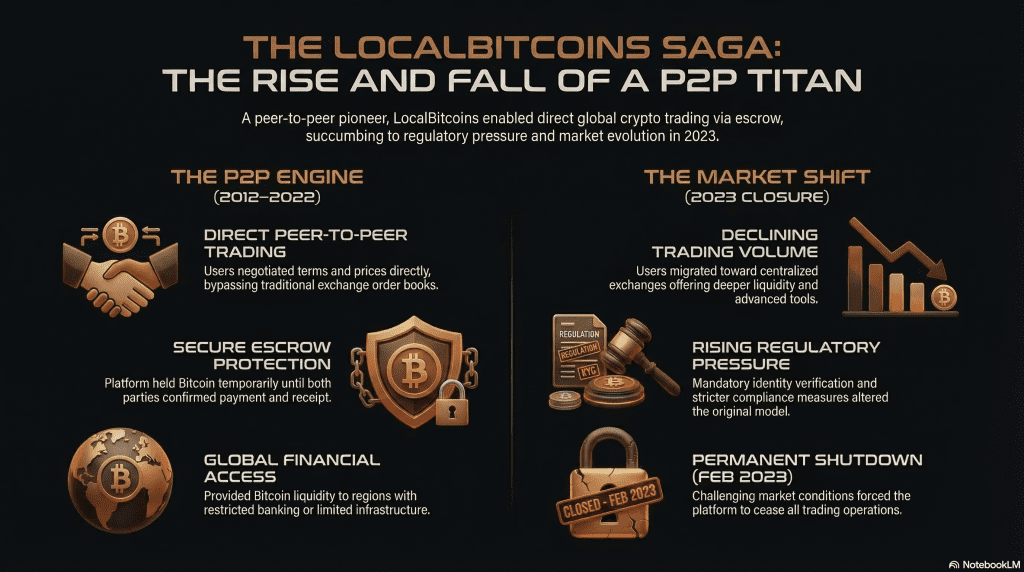
LocalBitcoins was a peer-to-peer Bitcoin trading platform founded in 2012 in Finland. Its main purpose was to allow individuals to buy and sell Bitcoin directly with one another instead of using a centralized exchange.
Unlike traditional exchanges that match orders automatically through an order book, LocalBitcoins operated through a listing system. Sellers could create advertisements specifying:
- the amount of Bitcoin available
- the price they wanted to sell at
- accepted payment methods
- geographic location or trading preferences
Buyers could browse these listings and choose a seller whose terms matched their needs.
One of the defining characteristics of the platform was its flexibility in payment options. Depending on the region, users could trade Bitcoin using bank transfers, online payment services, gift cards, or even in-person cash transactions.
To reduce fraud risk, LocalBitcoins used an escrow system. When a trade started, the Bitcoin involved was temporarily held by the platform until the buyer confirmed that payment had been sent. Once the seller verified the payment, the Bitcoin was released from escrow to the buyer.
This model allowed Bitcoin trading to occur in many parts of the world where centralized exchanges were not easily accessible. As a result, LocalBitcoins became one of the most widely used peer-to-peer Bitcoin marketplaces during the early years of cryptocurrency adoption.
How Peer-to-Peer Bitcoin Trading Worked
LocalBitcoins used a marketplace structure where users interacted directly rather than trading through an automated exchange system. Each trade began with a listing created by a seller offering Bitcoin for sale under specific terms.
Creating and Browsing Listings
Sellers could post advertisements that included details such as:
- the price per Bitcoin
- the amount available for sale
- accepted payment methods
- location or region preferences
Buyers could browse these listings and select a seller whose conditions matched their needs. Because listings were created by individuals, prices and payment options could vary widely between offers.
Starting a Trade
Once a buyer selected a listing, they could initiate a trade through the platform. At that point, the seller’s Bitcoin was temporarily locked in escrow by LocalBitcoins. This step ensured that the seller could not withdraw the Bitcoin while the transaction was in progress.
The buyer would then complete the payment using the method agreed upon in the listing, such as a bank transfer or other payment service.
Escrow and Confirmation
After sending payment, the buyer marked the trade as paid. The seller then verified that the payment had been received. Once confirmed, the Bitcoin held in escrow was released to the buyer’s wallet.
If a dispute occurred, LocalBitcoins could review the transaction and decide how the escrowed funds should be handled.
Reputation and Trust
Because users traded directly with one another, trust played an important role. The platform included a reputation system that showed each trader’s transaction history and feedback from previous trades.
This system helped buyers and sellers evaluate whether a trading partner had a reliable record before entering a transaction.

Why LocalBitcoins Became Popular
During the early years of cryptocurrency adoption, access to Bitcoin trading platforms was limited in many parts of the world. LocalBitcoins gained popularity because it provided a way for people to trade Bitcoin directly without needing a traditional exchange account.
Global Accessibility
One of the platform’s main advantages was its global reach. Because trades were arranged directly between individuals, LocalBitcoins could operate in regions where centralized exchanges were unavailable or restricted.
This allowed users in many countries to access Bitcoin even if local banking systems or regulations made it difficult to use traditional exchanges.
Flexible Payment Options
LocalBitcoins supported a wide range of payment methods. Sellers could choose which options they were willing to accept, including:
- bank transfers
- online payment services
- mobile payment platforms
- in-person cash transactions
This flexibility made it easier for users to complete trades using payment systems that were already available in their region.
Privacy and Control
Some users preferred the peer-to-peer model because it offered more control over the transaction process. Instead of relying entirely on a centralized exchange, buyers and sellers could negotiate directly and choose the terms of their trade.
Although the platform later introduced stricter identity verification requirements, earlier versions of the service attracted users who valued more private forms of trading.
Early Market Role
At a time when Bitcoin infrastructure was still developing, LocalBitcoins filled an important gap. The platform helped connect buyers and sellers around the world and made it possible for many individuals to participate in cryptocurrency markets for the first time.

Risks of Peer-to-Peer Bitcoin Trading
While peer-to-peer platforms like LocalBitcoins offered flexibility and global access, they also introduced certain risks that users needed to manage carefully. Because transactions occurred directly between individuals, each trade depended on the reliability of the parties involved.
Counterparty Risk
In peer-to-peer trading, buyers and sellers interact directly. This means there is always the possibility that one party may not follow through with the agreed terms. Although escrow systems reduce this risk, disputes can still occur if payment confirmations or transaction details are unclear.
Fraud and Scams
Some traders attempt to exploit inexperienced users by sending false payment confirmations, reversing transactions, or proposing deals outside the platform. Because of this, users needed to rely on platform protections and avoid completing transactions through unofficial channels.
Payment Reversals
Certain payment methods can be reversed after a transaction is completed. For example, some online payment services allow chargebacks. If a seller releases Bitcoin before confirming that a payment cannot be reversed, they may lose both the Bitcoin and the payment.
Reputation System Limitations
LocalBitcoins used a reputation system to help users evaluate trading partners. While this provided useful information, it was not a complete safeguard. New accounts with limited history or manipulated feedback could still pose risks.
Security Practices
To reduce these risks, experienced users often followed basic precautions, such as:
- using the platform’s escrow system for every trade
- reviewing a trader’s reputation and transaction history
- avoiding offers that required communication outside the platform
- confirming payment before releasing Bitcoin
Understanding these risks was an important part of using peer-to-peer marketplaces safely.
Why LocalBitcoins Shut Down
After more than a decade of operation, LocalBitcoins announced in early 2023 that it would shut down its trading platform. Several factors contributed to this decision, reflecting broader changes in the cryptocurrency industry.
Regulatory Pressure
Over time, cryptocurrency regulations became stricter in many countries. Peer-to-peer platforms that previously operated with minimal oversight began facing increased compliance requirements.
LocalBitcoins gradually introduced identity verification and other regulatory measures to meet these standards. While these steps were necessary for legal compliance, they also changed the platform’s original model and reduced some of the flexibility that had attracted early users.
Declining Trading Activity
As the cryptocurrency ecosystem matured, many traders shifted toward large centralized exchanges that offered faster transactions, deeper liquidity, and additional services such as derivatives trading and staking.
These platforms also invested heavily in mobile applications, customer support, and integrated financial tools, which made them appealing to new users entering the market.
As a result, peer-to-peer marketplaces like LocalBitcoins saw a gradual decline in trading volume.
Increased Competition
Other platforms also began offering peer-to-peer trading features within larger exchange ecosystems. For example, some major exchanges introduced integrated P2P marketplaces that allowed users to trade directly while still benefiting from the infrastructure and security of the exchange.
This combination of peer-to-peer flexibility and centralized platform support attracted many traders who might previously have used standalone services like LocalBitcoins.
End of Operations
In February 2023, LocalBitcoins announced that it would stop offering trading services. The company cited challenging market conditions and declining activity as key reasons for the closure.
Although the platform itself shut down, the peer-to-peer trading model it helped popularize continues to exist through other services that allow users to exchange cryptocurrency directly.

What Replaced LocalBitcoins
Although LocalBitcoins shut down in 2023, the peer-to-peer trading model it popularized did not disappear. Several platforms continue to offer similar services that allow users to trade cryptocurrency directly with one another.
Peer-to-Peer Marketplaces
Some cryptocurrency platforms now include dedicated peer-to-peer marketplaces where users can create listings and negotiate trades in a similar way to the LocalBitcoins model. These marketplaces typically support multiple payment methods and operate in many countries.
Examples include platforms that allow buyers and sellers to post offers, choose payment methods, and complete transactions through escrow systems that help reduce fraud risk.
Integrated P2P Services on Exchanges
Many large cryptocurrency exchanges now offer peer-to-peer trading features alongside their standard trading services. These platforms combine the flexibility of direct trading with the infrastructure of an established exchange.
Users can browse listings from other traders while still benefiting from account security measures, identity verification systems, and integrated wallets.
Continued Use of P2P Trading
Peer-to-peer trading remains relevant in situations where traditional exchanges are unavailable, restricted, or less practical due to local payment systems. In these cases, P2P marketplaces continue to provide an alternative way for individuals to access cryptocurrency.
Lasting Influence
Even though LocalBitcoins is no longer operating, its model helped demonstrate that decentralized marketplaces could connect buyers and sellers around the world. Many of the peer-to-peer trading systems used today follow similar principles, combining direct negotiation with escrow-based protection.
Conclusion
LocalBitcoins played an important role during the early development of the cryptocurrency ecosystem. By allowing individuals to trade Bitcoin directly with one another, the platform helped expand access to digital assets in many regions where traditional exchanges were not widely available.
Its peer-to-peer marketplace model demonstrated that cryptocurrency trading could occur outside centralized platforms, using escrow systems and reputation mechanisms to facilitate transactions between users.
Over time, however, the broader crypto industry evolved. Larger exchanges introduced more advanced trading tools, stronger compliance frameworks, and integrated services that attracted a growing share of users. As activity shifted toward these platforms and regulatory requirements increased, LocalBitcoins eventually ended its operations in 2023.
Although the platform itself is no longer active, its influence remains visible in modern peer-to-peer marketplaces and exchange-based P2P services. These platforms continue to apply many of the same principles that LocalBitcoins helped popularize.
Understanding how LocalBitcoins worked provides useful context for the evolution of cryptocurrency trading and the development of peer-to-peer financial systems.
Frequently Asked Questions
What was LocalBitcoins used for?
LocalBitcoins was a peer-to-peer marketplace that allowed individuals to buy and sell Bitcoin directly with one another. Instead of trading through an automated exchange, users created listings and negotiated transactions based on price, payment method, and location.
When did LocalBitcoins shut down?
LocalBitcoins announced the closure of its trading platform in February 2023. The company cited declining trading activity and challenging market conditions as reasons for ending operations.
Was LocalBitcoins a cryptocurrency exchange?
LocalBitcoins operated differently from traditional exchanges. It functioned as a peer-to-peer marketplace where users interacted directly rather than placing orders in a centralized order book.
How did LocalBitcoins protect users during trades?
The platform used an escrow system to hold Bitcoin during a transaction. When a trade began, the Bitcoin was temporarily locked until the buyer confirmed payment and the seller verified that the payment had been received.
Are peer-to-peer Bitcoin marketplaces still available?
Yes. Although LocalBitcoins closed, other platforms continue to offer peer-to-peer trading services. Some cryptocurrency exchanges also include P2P marketplaces that allow users to trade directly while using the exchange’s infrastructure and security systems.
1 thought on “What Was LocalBitcoins? The Rise and Fall of Peer-to-Peer”