Introduction
Artificial intelligence and blockchain are two of the most influential technologies shaping the current digital landscape. Each developed independently to solve different problems: AI focuses on analyzing data and automating decisions, while blockchain focuses on secure, decentralized recordkeeping.
Recently, however, these technologies have begun to intersect. Developers are exploring ways to combine machine learning with decentralized infrastructure to build systems that can process information, adapt to changing conditions, and operate without centralized control.
This convergence has given rise to a growing category often referred to as AI crypto. Instead of treating blockchain purely as a financial ledger, these projects attempt to integrate artificial intelligence into decentralized networks, data platforms, and digital marketplaces.
As interest in both technologies continues to expand, understanding where AI and blockchain genuinely complement each other and where hype may outpace reality has become increasingly important.
In this guide, we’ll examine how AI is being integrated into crypto ecosystems, what practical applications are emerging, which projects are leading development, and what opportunities and risks this evolving sector presents.
Key Takeaways
- AI crypto refers to blockchain projects that integrate artificial intelligence technologies to analyze data, automate decisions, and improve decentralized systems.
- Combining AI with blockchain can enable smarter smart contracts, automated trading systems, decentralized AI marketplaces, and enhanced fraud detection.
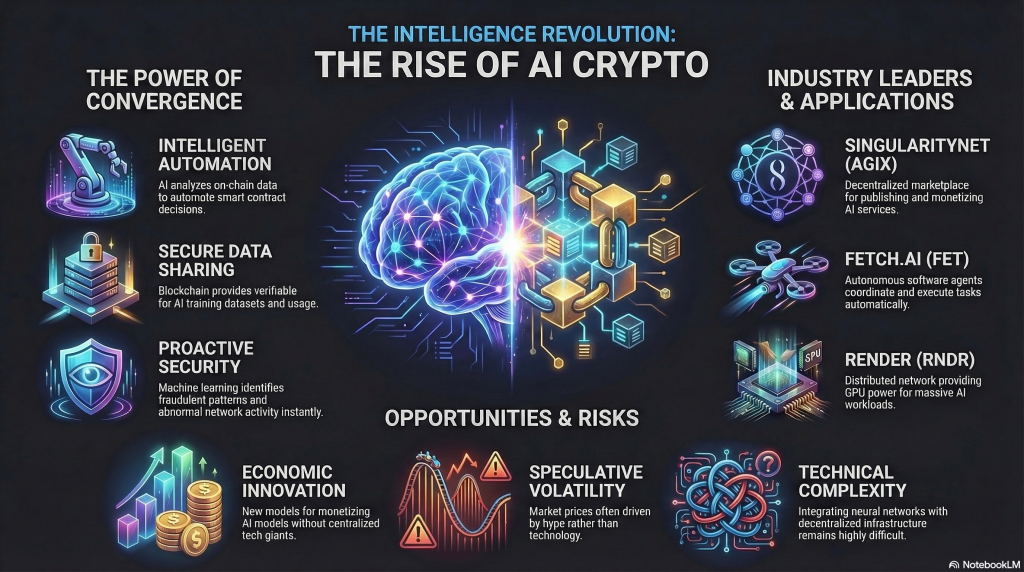
- Some well-known AI-focused crypto projects include SingularityNET (AGIX), Fetch.ai (FET), and Render (RNDR), each addressing different technical challenges.
- The sector is attracting attention because it sits at the intersection of two rapidly developing technologies: artificial intelligence and decentralized networks.
- Despite the potential, AI crypto projects face significant risks, including market volatility, technical complexity, and regulatory uncertainty.
- Evaluating AI crypto projects requires focusing on real use cases, active development, and practical adoption, rather than hype around artificial intelligence.
Why AI and Blockchain Are Converging
Artificial intelligence and blockchain address different challenges in digital systems, but their capabilities can complement each other in important ways.
AI excels at analyzing large datasets, identifying patterns, and making predictions or automated decisions. Blockchain, on the other hand, focuses on secure, transparent recordkeeping and decentralized coordination between participants who may not trust each other.
When these technologies are combined, each can help compensate for the limitations of the other.
For example, artificial intelligence systems often rely on large amounts of data and centralized computing infrastructure. This can create concerns around data ownership, transparency, and trust. Blockchain networks can help address these issues by providing verifiable records of data usage, decentralized marketplaces for data sharing, and transparent execution of algorithms through smart contracts.
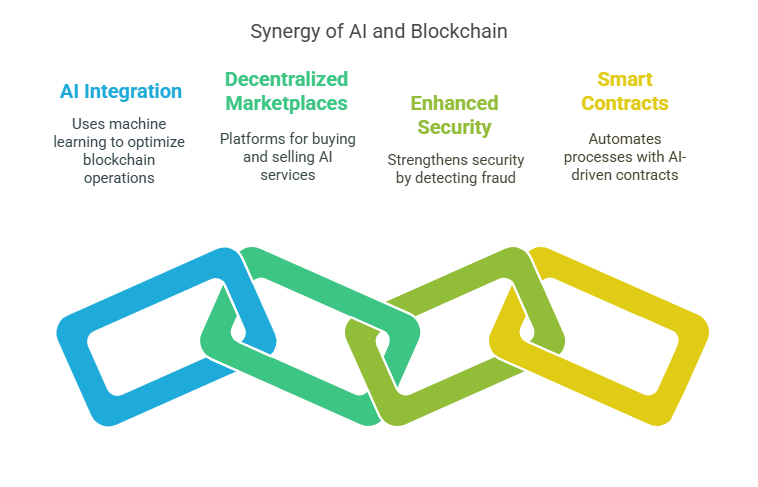
Conversely, blockchain systems can benefit from AI’s ability to process and interpret complex information. AI models can assist with tasks such as analyzing on-chain activity, optimizing network operations, detecting fraudulent transactions, or improving automated financial strategies in decentralized finance (DeFi).
Because of these complementary strengths, developers have begun experimenting with platforms where AI services, datasets, and computational resources can be exchanged through decentralized networks. In these environments, blockchain provides the infrastructure for coordination and trust, while AI provides the analytical capabilities that drive intelligent automation.
This convergence has led to a growing ecosystem of projects attempting to bring machine learning tools, data marketplaces, and automated decision systems into blockchain-based environments.

What AI Crypto Means in Practice
The term AI crypto is often used broadly, but in practice it refers to blockchain-based systems where artificial intelligence plays a functional role in how the network operates or delivers services.
In many cases, the goal is not simply to attach AI to a cryptocurrency project. Instead, developers are attempting to create decentralized environments where AI models, data, and computational resources can be shared, accessed, or monetized without relying on centralized platforms.
Several practical models have emerged within this space.
Decentralized AI Marketplaces
Some projects focus on building marketplaces where developers can publish AI models or services and allow others to access them through blockchain-based payments.
In these systems, blockchain acts as the coordination layer that handles payments, access rights, and verification, while AI performs the analytical or computational tasks.
This approach aims to create an open ecosystem where machine learning tools can be distributed and monetized without relying on centralized technology companies.
Autonomous Digital Agents
Another approach involves the use of software agents that can interact with blockchain systems on behalf of users or organizations.
These agents can be designed to analyze market conditions, execute trades, coordinate supply chain logistics, or interact with decentralized applications automatically. Artificial intelligence models help these agents adapt to changing conditions and improve their decision-making over time.
Decentralized Data and Compute Networks
AI systems require significant amounts of data and computing power. Some blockchain projects attempt to distribute these resources across decentralized networks.
Participants may contribute datasets, processing power, or storage capacity and receive tokens as compensation. AI models can then access these distributed resources to train models or perform complex computations.
Intelligent Financial Applications
In decentralized finance environments, AI can assist with tasks such as risk analysis, fraud detection, and automated strategy optimization. These tools can analyze large amounts of blockchain data to identify patterns that may help improve the performance or safety of financial protocols.
Together, these approaches illustrate how AI crypto projects are attempting to build decentralized infrastructure for machine learning, data exchange, and automated decision systems.
How Artificial Intelligence Improves Blockchain Systems
Artificial intelligence can enhance blockchain networks by helping them process information more effectively, detect risks earlier, and automate complex decisions that would otherwise require human intervention.
While blockchain provides transparency and secure data storage, it does not inherently analyze the information it records. AI systems can add that analytical layer.
Data Analysis and Pattern Detection
Blockchain networks generate large amounts of transaction data. AI models can analyze this data to identify patterns, trends, or irregular behavior.
For example, machine learning algorithms can be used to:
- detect suspicious transactions
- identify emerging market trends
- analyze trading activity across multiple exchanges
This type of analysis can improve decision-making for developers, exchanges, and users.
Fraud Detection and Security Monitoring
Artificial intelligence can help monitor blockchain networks for abnormal activity. By training models on historical transaction data, AI systems can identify behaviors that may indicate fraud, market manipulation, or security threats.
These tools can support exchanges, DeFi platforms, and analytics providers by flagging potential risks before they escalate.
Optimization of Network Operations
Some blockchain systems explore AI tools to optimize network performance. For example, AI models may help improve transaction routing, manage network congestion, or analyze validator performance.
Although this area is still developing, research continues on how AI-driven analytics could make blockchain networks more efficient and adaptive.
Smarter Automated Systems
Blockchain-based applications often rely on automated rules embedded in smart contracts. Artificial intelligence can add another layer of automation by analyzing external data and adjusting behavior accordingly.
In financial applications, for example, AI models may help evaluate market conditions or assess risk factors before triggering certain actions within decentralized systems.
Together, these capabilities illustrate how artificial intelligence can complement blockchain infrastructure by adding analytical intelligence to decentralized systems that already provide transparency and security.
Major Use Cases of AI in Crypto
As artificial intelligence and blockchain technologies continue to develop, several practical applications are emerging where the combination of both systems can provide meaningful advantages. These use cases focus on improving efficiency, transparency, and automation within decentralized environments.
Decentralized AI Marketplaces
One of the most prominent use cases is the creation of decentralized marketplaces for AI services and models.
In these platforms, developers can publish machine learning tools or datasets and allow others to access them through blockchain-based payment systems. Blockchain provides the infrastructure for access control, payments, and transparent recordkeeping, while AI performs the computational tasks.
This model allows AI developers to distribute their work without relying on centralized platforms.
Automated Financial Systems
Artificial intelligence can also be applied within decentralized finance (DeFi). AI models can analyze market data, liquidity levels, and user behavior to assist with tasks such as:
- automated trading strategies
- portfolio optimization
- risk management
By analyzing large amounts of financial data, AI systems may help improve the performance and efficiency of certain financial applications.
Fraud Detection and Security Monitoring
Blockchain networks are transparent, but the volume of activity can make manual monitoring difficult. AI systems can analyze transaction patterns to identify potential fraud, suspicious wallet behavior, or unusual network activity.
Exchanges, analytics platforms, and security tools increasingly rely on machine learning techniques to help monitor blockchain ecosystems.
Decentralized Data Markets
AI models require large datasets for training and analysis. Blockchain-based data marketplaces allow individuals or organizations to share data while maintaining verifiable records of ownership and usage.
Participants who contribute valuable datasets may receive compensation through token-based systems, creating an economic incentive for data sharing.
Distributed Computing for AI
Training and operating AI models requires substantial computational power. Some blockchain projects attempt to create distributed computing networks where users contribute GPU or processing capacity.
In these networks, AI workloads can be distributed across many independent participants, who receive cryptocurrency rewards for providing computational resources.
These use cases demonstrate how the integration of artificial intelligence and blockchain can support data sharing, automation, decentralized infrastructure, and improved analytical capabilities across digital systems.
Leading AI Crypto Projects
Several blockchain projects are actively exploring how artificial intelligence can be integrated into decentralized systems. While the sector is still developing, a few platforms have gained attention for building infrastructure that combines machine learning with blockchain networks.
SingularityNET (AGIX)
SingularityNET focuses on creating a decentralized marketplace for artificial intelligence services. The platform allows developers to publish AI models that other users or applications can access through blockchain-based payments.
By providing an open marketplace, SingularityNET aims to make AI development and distribution more accessible while reducing reliance on centralized technology providers.
The network uses the AGIX token to facilitate payments for AI services within the ecosystem.
Fetch.ai (FET)
Fetch.ai is designed around the concept of autonomous software agents that can perform tasks on behalf of users. These agents can interact with decentralized applications, analyze data, and execute actions such as managing digital resources or optimizing certain transactions.
The goal of the project is to enable automated coordination between devices, services, and digital systems using blockchain infrastructure.
The FET token supports transactions and operations across the network.
Render (RNDR)
Render focuses on decentralized GPU computing for rendering and graphics processing. The network allows users with spare GPU capacity to contribute computing power, which can then be used by creators or developers who need large-scale processing resources.
Although the platform is widely used for graphics rendering, it also has relevance for artificial intelligence workloads, which often require significant computing resources.
The RNDR token is used to compensate participants who provide computational power to the network.
Other Emerging Projects
In addition to these larger platforms, several smaller projects are exploring different aspects of AI and blockchain integration. Some focus on decentralized data sharing, while others aim to provide AI inference tools or distributed machine learning infrastructure.
As the field develops, the long-term success of these projects will likely depend on their ability to deliver practical applications rather than relying solely on the growing interest in artificial intelligence technologies.
Opportunities and Risks in the AI Crypto Sector
The intersection of artificial intelligence and blockchain has attracted significant attention from developers, investors, and technology companies. While the sector presents promising opportunities, it also involves substantial uncertainty and risk.
Potential Opportunities
Technological innovation
AI crypto projects attempt to combine two rapidly developing technologies. If successful, these systems could support new forms of decentralized services such as data marketplaces, automated digital agents, and distributed computing networks.
New economic models
Blockchain infrastructure can enable marketplaces where AI models, datasets, and computational resources are exchanged directly between participants. This could allow developers and data providers to monetize their work without relying on centralized platforms.
Growing research and investment
Both artificial intelligence and blockchain technologies continue to receive increasing research funding and venture investment. As development progresses, some AI crypto projects may contribute to broader innovation in data infrastructure, financial technology, and distributed computing.
Key Risks
Market volatility
Cryptocurrency markets are known for significant price fluctuations. AI-related tokens are no exception and may experience large price movements driven by speculation rather than technological progress.
Technological complexity
Integrating artificial intelligence with decentralized networks presents technical challenges. Many projects remain in early stages of development, and some may struggle to deliver the functionality described in their proposals.
Overhyped narratives
The popularity of artificial intelligence has led some projects to emphasize AI features without clear technical implementation. Evaluating the actual role of AI within a project is essential when assessing its credibility.
Regulatory uncertainty
Both artificial intelligence and cryptocurrency are receiving increased attention from regulators in many jurisdictions. Future regulations related to data usage, financial services, or digital assets may influence how AI crypto projects operate.
Because of these factors, the long-term development of the AI crypto sector will likely depend on projects that can demonstrate real technical capabilities and sustainable use cases.

Market Trends Shaping AI Crypto
As artificial intelligence and blockchain technologies continue to evolve, several broader trends are influencing how AI crypto projects develop and where the sector may move in the coming years.
Growth of Decentralized AI Platforms
Traditional artificial intelligence systems are typically developed and controlled by large technology companies with access to extensive data and computing resources. In contrast, some blockchain projects aim to create decentralized environments where AI models, datasets, and tools can be shared across open networks.
These platforms attempt to allow developers, researchers, and data providers to collaborate while maintaining verifiable ownership and compensation through blockchain-based systems.
Increasing Demand for Computing Resources
Training and running modern AI models requires significant computational power, particularly from GPUs and specialized hardware. Decentralized computing networks are exploring ways to distribute these workloads across global participants who can contribute spare processing capacity.
If these models scale effectively, they could provide an alternative to centralized cloud infrastructure for certain AI workloads.
Expansion of Data Marketplaces
AI models depend heavily on high-quality datasets. Blockchain-based data marketplaces aim to create environments where individuals and organizations can share or license datasets in a transparent and verifiable way.
These systems attempt to address challenges around data ownership, provenance, and compensation for data contributors.
Integration with Decentralized Finance (DeFi)
Some projects are experimenting with applying AI tools within decentralized finance ecosystems. Potential applications include market analysis, automated trading strategies, and improved monitoring of financial risks within DeFi protocols.
Although these applications remain in development, they illustrate how AI analytics may influence decentralized financial systems.
Continued Industry Experimentation
The AI crypto sector is still in an early phase. Many projects are testing different models for integrating machine learning with decentralized networks, and not all approaches will succeed.
However, ongoing experimentation in areas such as distributed computing, data sharing, and autonomous digital agents suggests that the intersection of AI and blockchain will likely remain an active area of technological development.
Conclusion
The growing intersection between artificial intelligence and blockchain technology has created a new category of projects often referred to as AI crypto. These initiatives attempt to combine decentralized infrastructure with machine learning tools to build systems capable of analyzing data, automating processes, and supporting new digital marketplaces.
While the concept presents promising possibilities particularly in areas such as distributed computing, data sharing, and automated financial systems the sector is still evolving. Many projects remain experimental, and long-term success will depend on whether these platforms can deliver practical solutions rather than relying on technological hype.
Understanding how AI and blockchain interact provides valuable context for evaluating these developments. As both technologies continue to mature, their combined applications may play a role in shaping future digital infrastructure across finance, data management, and decentralized networks.
Frequently Asked Questions
What is AI crypto?
AI crypto refers to blockchain-based projects that incorporate artificial intelligence technologies to analyze data, automate processes, or improve decentralized systems. These projects attempt to combine machine learning tools with blockchain infrastructure to create more adaptive digital networks.
How do AI and blockchain work together?
Artificial intelligence focuses on analyzing data and making predictions, while blockchain provides transparent and secure recordkeeping. When combined, blockchain can provide trusted data and decentralized coordination, while AI can analyze information and support automated decision-making within decentralized applications.
Are AI crypto projects different from regular cryptocurrencies?
Yes. Traditional cryptocurrencies primarily focus on payments, financial transactions, or decentralized finance. AI crypto projects attempt to integrate machine learning or data-driven systems into blockchain networks, often supporting applications such as data marketplaces, automated agents, or distributed computing.
Which AI crypto projects are well known?
Some widely discussed AI-related blockchain projects include SingularityNET (AGIX), Fetch.ai (FET), and Render (RNDR). Each project focuses on different areas, such as decentralized AI services, autonomous digital agents, or distributed computing resources.
Is AI crypto considered a high-risk sector?
Like many areas within cryptocurrency, AI crypto projects can involve significant risk. Market volatility, technical complexity, and evolving regulations all affect the sector. Careful research and evaluation of project fundamentals are important before engaging with any cryptocurrency project.
Can AI improve blockchain security?
Artificial intelligence can assist with monitoring blockchain activity by analyzing transaction patterns and identifying potential anomalies. These tools may help exchanges, analytics providers, or security platforms detect suspicious behavior more quickly. However, AI is typically used as a supportive analytical tool rather than a replacement for core blockchain security mechanisms.