Introduction
Cryptocurrency is often introduced through headlines about prices, trading, or sudden market movements. But behind those headlines is a broader system of technology and digital networks that work very differently from traditional financial platforms.
For someone new to the space, the challenge is not just learning a few terms. It’s understanding how the pieces fit together, how digital assets move across blockchain networks, how wallets and exchanges are used, and what basic security practices are necessary before interacting with these systems.
This guide provides a clear starting point for beginners who want to explore cryptocurrency in a structured and responsible way. We’ll walk through the core ideas behind digital assets, explain the tools people use to interact with them, and highlight the safety practices that help new users avoid common mistakes.
Key Takeaways
- Cryptocurrency is a form of digital asset that operates on blockchain networks, allowing transactions to occur without traditional financial intermediaries.
- Blockchain technology records transactions on a distributed ledger, which helps ensure transparency and makes altering confirmed records extremely difficult.
- Crypto wallets are used to manage private keys and interact with blockchain networks, enabling users to send, receive, and store digital assets.
- Cryptocurrency exchanges act as platforms where users can buy, sell, or convert digital assets, often providing access between traditional currencies and crypto networks.
- Because blockchain transactions are generally irreversible, beginners should prioritize security practices such as protecting private keys, verifying transaction details, and using reputable services.
- Learning the basic tools and concepts of cryptocurrency helps new users navigate the ecosystem more confidently while reducing the risk of common mistakes.

What Cryptocurrency Is
Cryptocurrency is a type of digital asset that operates on blockchain networks. Instead of relying on a central authority such as a bank or payment processor, these systems use distributed networks of computers to record and verify transactions.
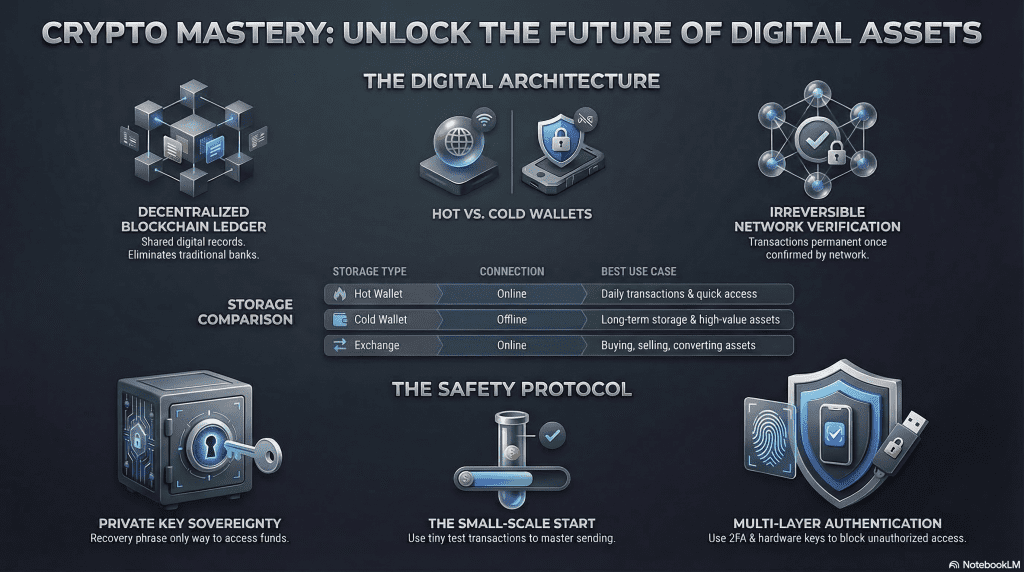
At the core of most cryptocurrencies is a blockchain, which functions as a shared digital ledger. This ledger records transactions in blocks of data that are linked together chronologically. Once a transaction is confirmed by the network, it becomes part of this permanent record.
Unlike traditional currencies issued by governments, cryptocurrencies are typically governed by software protocols. These protocols define how transactions are verified, how new units of the currency are created, and how the network operates.
Cryptocurrencies can serve several roles within digital systems. In some cases they function as a medium of exchange for transferring value between users. In other cases they are used within blockchain-based applications, where they may help power network activity or support decentralized services.
Because these systems operate through cryptographic verification rather than centralized control, participants interact with the network using digital tools such as wallets and addresses. Understanding these components is essential for anyone beginning to explore cryptocurrency.
Why People Use Cryptocurrency
People interact with cryptocurrency networks for different reasons. While the technology is often associated with investing or trading, its broader purpose is to enable new ways of transferring value and operating digital systems.
One reason cryptocurrencies attract attention is their ability to support peer-to-peer transactions. Instead of sending funds through multiple financial intermediaries, users can transfer digital assets directly across a blockchain network. The transaction is verified by the network and recorded on the public ledger.
Another factor is global accessibility. Because blockchain networks operate on the internet, they can be accessed from many parts of the world without requiring traditional banking infrastructure. For some users, this opens the possibility of transferring or storing value through digital systems rather than conventional financial institutions.
Cryptocurrencies also play a role in blockchain-based applications. Certain networks allow developers to build decentralized applications that run through smart contracts. In these systems, cryptocurrencies can be used to pay transaction fees, interact with applications, or support network operations.
Some people are also interested in cryptocurrency because it introduces a new model for digital ownership and financial infrastructure. Blockchain systems allow records of transactions, assets, and agreements to be maintained across distributed networks rather than controlled by a single organization.
These different use cases help explain why cryptocurrency has become a topic of global discussion. For beginners, understanding the technology behind these systems is an important step before interacting with them directly.
How Cryptocurrency Transactions Work
Cryptocurrency transactions move digital assets from one address to another across a blockchain network. Unlike traditional payment systems, these transfers are verified by decentralized networks rather than a central authority.
Transaction Creation
A transaction begins when a user initiates a transfer using a crypto wallet. The wallet software prepares a transaction that includes:
- The sender’s address
- The recipient’s address
- The amount being transferred
- A digital signature created using the sender’s private key
The digital signature confirms that the person initiating the transaction has the authority to spend the funds associated with the sending address.
Network Verification
Once the transaction is created, it is broadcast to the blockchain network. Nodes on the network review the transaction and verify that it follows the protocol rules. This typically includes confirming that the digital signature is valid and that the sender’s address has sufficient balance.
Depending on the blockchain, transactions may be validated through mechanisms such as Proof of Work or Proof of Stake, which help the network agree on which transactions should be recorded.
Recording on the Blockchain
After verification, the transaction is included in a block and added to the blockchain ledger. This update is then distributed across the network so that all participating nodes maintain synchronized copies of the ledger.
Once a transaction receives enough confirmations from the network, it becomes part of the permanent blockchain record. Because of this structure, confirmed transactions are generally difficult to reverse.
Understanding this process helps beginners see how cryptocurrency systems enable transfers of digital value without relying on centralized financial institutions.

Crypto Wallets: How Users Access and Manage Cryptocurrency
To interact with cryptocurrency networks, users rely on tools known as crypto wallets. Despite the name, a wallet does not physically store cryptocurrency. Instead, it manages the cryptographic keys that allow a user to access and control digital assets recorded on a blockchain.
What a Crypto Wallet Does
A wallet’s primary function is to manage the private keys associated with cryptocurrency addresses. These keys are required to authorize transactions on the blockchain.
Through a wallet interface, users can:
- Send cryptocurrency to other addresses
- Receive funds from other users
- View transaction history
- Manage multiple addresses or assets
The wallet acts as the gateway between the user and the blockchain network.
Hot Wallets
Hot wallets are connected to the internet. They are commonly used for everyday transactions because they allow quick access to funds.
Examples include:
- Mobile wallet apps
- Desktop wallet software
- Web-based wallets provided by platforms
Because hot wallets are online, they offer convenience but may require additional security precautions.
Cold Wallets
Cold wallets store private keys offline, reducing exposure to internet-based threats. These wallets are often used for holding larger amounts of cryptocurrency or for long-term storage.
Common forms include:
- Hardware wallets
- Offline storage methods such as paper backups
By keeping keys disconnected from online systems, cold wallets provide an additional layer of protection.
Private Keys and Recovery Phrases
Most wallets generate a recovery phrase, also called a seed phrase. This phrase allows the wallet and its associated keys to be restored if the device is lost or replaced.
Because the recovery phrase controls access to the wallet, it should be stored securely and kept private.
Understanding how wallets function is an important step for beginners, since controlling private keys is central to how cryptocurrency ownership works.
Cryptocurrency Exchanges: Where People Access Crypto Markets
Cryptocurrency exchanges are online platforms that allow users to buy, sell, and convert digital assets. For many beginners, exchanges serve as the first point of access to cryptocurrency networks because they connect traditional currencies with digital assets.
What Crypto Exchanges Do
Exchanges act as marketplaces where users can trade cryptocurrencies or purchase them using traditional payment methods such as bank transfers or debit cards.
Common functions offered by exchanges include:
- Buying cryptocurrency with traditional currency
- Converting one cryptocurrency into another
- Viewing market prices and transaction history
- Withdrawing assets to personal wallets
Some platforms also provide additional tools such as portfolio tracking or educational resources.
Account Setup and Verification
Many exchanges require users to create an account before accessing their services. Depending on the platform and local regulations, this may include identity verification steps.
These verification processes are often used to comply with financial regulations and to help prevent fraud or misuse of the platform.
Exchange Custody vs. Personal Wallets
When users purchase cryptocurrency through an exchange, the platform may initially hold the assets in a wallet associated with the account.
While this can be convenient for trading, some users choose to transfer assets to a personal wallet. Managing assets in a personal wallet allows the user to control the private keys rather than relying on the exchange to safeguard them.
For beginners, understanding how exchanges operate helps clarify how cryptocurrency is purchased and how it moves between platforms and wallets.

A Simple Process for Getting Started
For beginners, the best way to explore cryptocurrency is to approach it gradually. Instead of trying to learn everything at once, focus on understanding the basic tools and processes used to interact with blockchain networks.
1. Learn the Basic Concepts
Before using any platform or transferring funds, it helps to understand a few core ideas such as blockchain networks, cryptocurrency addresses, and how wallets manage private keys. Having a basic understanding of these concepts reduces confusion when interacting with crypto services.
2. Choose a Reputable Exchange
Many beginners begin by using a cryptocurrency exchange to access the market. These platforms allow users to convert traditional currency into digital assets and provide interfaces for managing transactions.
When selecting a platform, consider factors such as security features, regulatory compliance in your region, user reviews, and the clarity of the platform’s fee structure.
3. Set Up a Crypto Wallet
After acquiring cryptocurrency, some users choose to transfer their assets to a personal wallet. This allows them to control their private keys and manage transactions directly.
Wallets can be installed as mobile applications, desktop software, or hardware devices designed for secure key storage.
4. Make a Small First Transaction
When using cryptocurrency for the first time, it is often helpful to begin with a small transaction. This allows users to become familiar with sending, receiving, and confirming transactions without risking significant funds.
Testing the process on a small scale can make the system easier to understand.
5. Continue Learning as You Explore
Cryptocurrency networks evolve quickly, and many concepts become clearer through experience. Beginners often benefit from continuing to learn about topics such as transaction fees, wallet security, and blockchain technology as they become more comfortable with the ecosystem.
Taking a gradual approach allows new users to understand how the system works while reducing the likelihood of costly mistakes.

Common Mistakes Beginners Make
Many problems new users encounter in cryptocurrency come from avoidable mistakes rather than technical failures. Understanding these common issues can help beginners interact with blockchain systems more carefully.
Sending Funds to the Wrong Address
Cryptocurrency transactions rely on exact address strings. If funds are sent to an incorrect address, the transfer is usually permanent and cannot be reversed.
For this reason, users typically copy and paste addresses rather than typing them manually and verify the address carefully before confirming a transaction.
Using the Wrong Network
Some digital assets exist on multiple blockchain networks. Sending assets through an incompatible network can prevent the receiving platform or wallet from recognizing the transaction.
Before sending cryptocurrency, it is important to confirm that both the sending and receiving platforms support the same network.
Losing Private Keys or Recovery Phrases
Control over cryptocurrency depends on access to private keys or recovery phrases. If these credentials are lost, the associated funds may become permanently inaccessible.
Many users store recovery phrases offline in secure locations to reduce the risk of loss.
Rushing Into Decisions
Cryptocurrency markets can move quickly, which sometimes encourages impulsive decisions. Beginners may benefit from taking time to understand the technology, the tools they are using, and the risks involved before interacting with digital assets.
Falling for Scams
Scams are a persistent issue in the cryptocurrency space. Common tactics include phishing websites, impersonation of support teams, and fraudulent investment offers.
Users can reduce their exposure to these risks by verifying website addresses, avoiding unsolicited offers, and keeping private keys confidential.
Recognizing these common mistakes helps beginners approach cryptocurrency with greater caution and awareness.
Basic Security Practices for Beginners
Security is one of the most important aspects of using cryptocurrency. Because blockchain transactions are typically irreversible and accounts are not protected by traditional banking systems, users are responsible for protecting their own access credentials and devices.
Use Strong Authentication
Accounts connected to exchanges or wallet services should use strong, unique passwords. Enabling two-factor authentication (2FA) adds an additional verification step that helps prevent unauthorized access.
Authentication apps are often preferred over SMS-based verification because they provide an extra layer of protection against certain types of attacks.
Protect Private Keys and Recovery Phrases
Private keys and recovery phrases give full control over cryptocurrency funds. These credentials should never be shared with anyone and should be stored in secure locations.
Many users write their recovery phrase down and store it offline rather than saving it on internet-connected devices.
Verify Transactions Carefully
Before sending cryptocurrency, it is important to verify key details such as the recipient address and the selected network. Because transactions cannot usually be reversed once confirmed, careful verification can help prevent accidental losses.
Some users also send small test transactions before transferring larger amounts.
Keep Software and Devices Secure
Wallet applications, operating systems, and devices should be kept up to date to reduce exposure to security vulnerabilities. Using trusted software sources and avoiding unknown downloads can also reduce risks.
By following these basic practices, beginners can reduce many of the common security risks associated with cryptocurrency systems.

Understanding Cryptocurrency Volatility
One of the characteristics of cryptocurrency markets is price volatility. The value of digital assets can change significantly over short periods of time compared with many traditional financial instruments.
Several factors contribute to this volatility.
Market Demand and Speculation
Cryptocurrency markets are influenced by supply and demand dynamics, as well as speculation about future developments in the technology or its adoption. News events, regulatory announcements, and broader economic conditions can all affect market activity.
Because the market is still developing, price movements can sometimes be more pronounced than in more established financial markets.
Emerging Technology
Cryptocurrency and blockchain systems are relatively new technologies. As networks evolve, new features, updates, and competing platforms can influence how different assets are perceived or used.
This ongoing development can contribute to fluctuations in market sentiment and asset values.
Global Participation
Cryptocurrency markets operate continuously and are accessible across many regions of the world. This global participation means that market activity can change at any time, influenced by users and institutions in different jurisdictions.
Why Volatility Matters for Beginners
Understanding that cryptocurrency markets can experience rapid price changes helps beginners approach the space more cautiously. Learning about the technology and how the ecosystem functions can provide a better foundation before interacting with digital assets.
Recognizing volatility as a characteristic of emerging markets encourages a more measured and informed approach to exploring cryptocurrency systems.
Conclusion
Cryptocurrency introduces a different way of transferring and managing digital value. Instead of relying on centralized financial institutions, blockchain networks allow transactions to be verified and recorded through distributed systems.
For beginners, the most important step is building a clear understanding of the fundamentals. Learning how cryptocurrency works, how wallets and exchanges function, and how transactions are verified helps create a strong foundation before interacting with these systems.
Security awareness is also essential. Protecting private keys, verifying transaction details, and using reputable services can help reduce the risks that new users often encounter when first exploring cryptocurrency.
As the technology continues to evolve, gaining familiarity with these core concepts allows beginners to approach cryptocurrency more confidently and continue expanding their knowledge of the broader blockchain ecosystem.

Frequently Asked Questions
Is cryptocurrency safe to use?
Cryptocurrency networks themselves are designed with strong cryptographic security. However, the safety of using cryptocurrency often depends on how users manage their wallets, private keys, and accounts. Following basic security practices such as protecting recovery phrases and verifying transactions can help reduce risks.
Do I need a crypto wallet to start?
Many exchanges provide a built-in wallet when you create an account. This allows beginners to buy and hold cryptocurrency directly on the platform. Some users later choose to use a personal wallet so they can manage their own private keys.
How much money is needed to try cryptocurrency?
Most platforms allow users to purchase very small amounts of cryptocurrency. This means beginners can explore how the system works without committing large amounts of money.
Can cryptocurrency transactions be reversed?
In most cases, no. Once a transaction is confirmed on a blockchain network, it becomes part of the permanent ledger. This is why it is important to verify transaction details carefully before sending funds.
What happens if I lose my wallet credentials?
Access to cryptocurrency is controlled by private keys or recovery phrases. If these credentials are lost and no backup exists, the associated funds may become permanently inaccessible. For this reason, secure backups are an essential part of wallet management.
Disclaimer: This blog post is for informational purposes only and should not be considered financial advice. I am not a licensed financial advisor, and you should always do your own research or consult a professional before making any financial decisions. Cryptocurrencies are volatile and involve significant risk of loss. Past performance is not indicative of future results.
Your Phone Could Be Paying You Daily
DONE-FOR-YOU ISH...

1 thought on “Cryptocurrency for Beginners: A Guide to Getting Started Safely”