Introduction
As interest in cryptocurrency continues to grow, many people are looking for structured ways to understand how the technology and markets work. While free articles, videos, and forums can provide useful insights, the information is often scattered and difficult to organize into a clear learning path.
Online crypto courses attempt to solve this problem by presenting concepts in a structured format. Depending on the program, learners can study topics such as blockchain fundamentals, cryptocurrency trading strategies, decentralized finance (DeFi), or blockchain development.
However, the quality of available courses varies widely. Some focus only on basic definitions, while others provide deeper technical or practical training designed to help learners apply what they study.
This guide explores different types of crypto courses and highlights several widely recognized programs available online. Whether your goal is to understand how blockchain works, improve trading knowledge, or explore development in Web3, choosing the right course can make the learning process more efficient.
Key Takeaways
- Online crypto courses can provide a structured learning path for understanding blockchain technology, cryptocurrency markets, and Web3 applications.
- Courses generally fall into several categories, including beginner education, crypto trading, blockchain development, and DeFi specialization.
- Many reputable platforms offer free introductory courses, while more advanced programs may include paid certifications or developer training.
- The most useful courses focus on practical skills, such as using wallets, analyzing markets, writing smart contracts, or interacting with blockchain applications.
- Choosing the right course depends on your learning goals, technical background, and available time.
- Free courses are often ideal for beginners, while paid courses may provide deeper instruction, mentorship, or career-oriented certifications.
- Regardless of the course you choose, continued learning and real-world practice are essential for developing meaningful skills in the crypto ecosystem.
Disclaimer: Some links on this website are affiliate links. That means if you click and make a purchase, we may earn a small commission at no extra cost to you. The views expressed here are not official statements from any outside company.
Why Structured Learning Helps in Crypto
Cryptocurrency and blockchain technology combine several complex subjects, including cryptography, distributed systems, financial markets, and software development. For newcomers, learning these topics through scattered articles or videos can quickly become overwhelming.
Structured courses help organize this information into a logical sequence. Instead of jumping between unrelated resources, learners follow a curriculum that gradually introduces core ideas before moving to more advanced concepts.
A well-designed crypto course typically provides:
- Clear progression from basic concepts to practical applications
- Step-by-step explanations of how blockchain systems function
- Examples and demonstrations that show how tools and platforms work
- Exercises or projects that help reinforce understanding
For beginners, this structure can make it easier to understand foundational topics such as wallets, private keys, blockchain transactions, and decentralized networks.
More advanced learners may benefit from specialized courses that explore areas like trading strategies, smart contract development, or decentralized finance protocols. These courses often include technical exercises, coding projects, or real-world market analysis.
While courses are not the only way to learn about cryptocurrency, they can provide a more efficient starting point by reducing confusion and presenting key ideas in a structured format.
Types of Crypto Courses
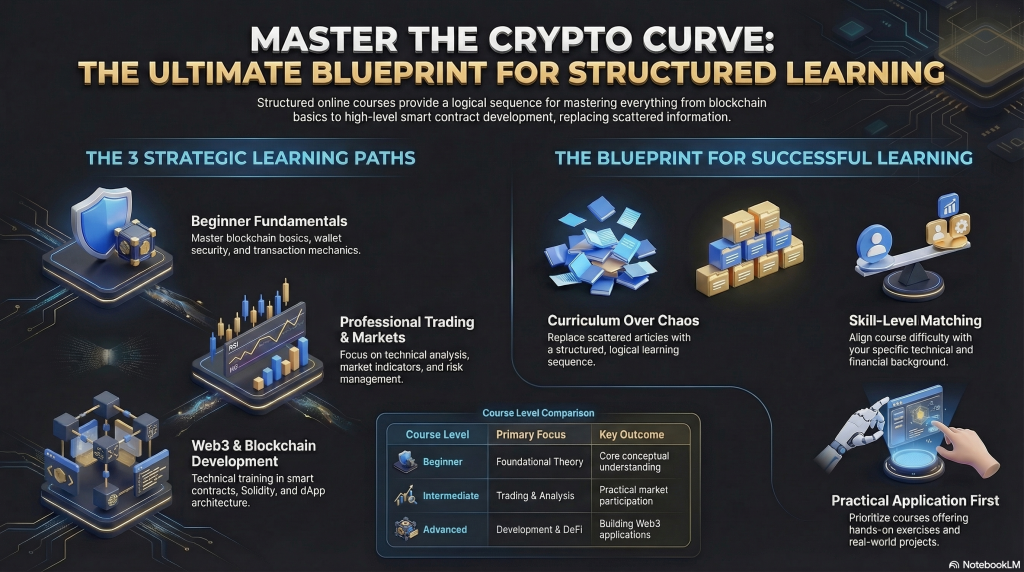
Online crypto education is not limited to one format. Different courses focus on different parts of the cryptocurrency ecosystem, depending on the learner’s goals and level of experience. Understanding these categories can help you choose a course that aligns with what you want to achieve.
Beginner Blockchain Courses
Beginner courses focus on explaining the fundamentals of cryptocurrency and blockchain technology. They usually cover topics such as how blockchains work, how transactions are recorded, and how digital wallets store assets.
These courses are designed for people who are new to the space and want to understand core concepts before exploring more advanced topics.
Typical subjects include:
- Blockchain basics
- Cryptocurrency transactions
- Wallets and private keys
- Bitcoin and other major cryptocurrencies
Crypto Trading Courses
Some courses focus specifically on cryptocurrency markets and trading strategies. These programs typically teach how traders analyze price movements, manage risk, and interpret trading charts.
Topics often include:
- Technical analysis
- Market trends and indicators
- Trading psychology
- Risk management strategies
These courses are more useful for learners who want to actively participate in trading rather than simply understanding the technology.
Blockchain Development Courses
Blockchain development courses are aimed at learners who want to build applications or work as developers in the Web3 ecosystem. These programs typically require some programming background.
Subjects commonly include:
- Smart contract development
- Programming languages such as Solidity
- Building decentralized applications (dApps)
- Blockchain architecture and security
These courses are more technical and are often longer than beginner courses.
DeFi and Web3 Specialization
Some advanced programs focus on decentralized finance (DeFi) and the broader Web3 ecosystem. These courses examine how decentralized protocols function and how users interact with them.
Topics may include:
- Decentralized exchanges
- Liquidity pools and yield farming
- Token economics
- Web3 infrastructure and applications
Because these subjects build on earlier blockchain knowledge, they are usually best suited for learners who already understand the fundamentals.
Best Crypto Courses for Beginners
For people who are new to cryptocurrency, the best starting point is a course that explains the core ideas behind blockchain and digital assets. Beginner-level programs usually focus on foundational knowledge rather than trading strategies or advanced technical development.
The following courses are widely recognized for providing accessible introductions to cryptocurrency concepts.
Bitcoin for Everybody – Saylor Academy
This course focuses on the economic and technological foundations of Bitcoin. It explains why decentralized digital currencies were created and how they function within a broader financial system.
Key highlights include:
- Clear explanation of Bitcoin’s design and purpose
- Lessons covering monetary history and digital scarcity
- Self-paced learning with a certificate option
Because it focuses specifically on Bitcoin, this course can provide a strong conceptual starting point for understanding the broader crypto ecosystem.
Bitcoin and Cryptocurrency Technologies – Princeton University (via Coursera)
This academic course explores the technical foundations behind cryptocurrencies and blockchain networks. It covers cryptographic principles, consensus mechanisms, and how decentralized systems maintain trust without central authorities.
Students learn about topics such as:
- Blockchain structure and transactions
- Mining and consensus algorithms
- Security considerations in decentralized networks
Because of its academic approach, this course is particularly useful for learners who want a deeper understanding of how blockchain systems operate.
Crypto Basics – Udemy
Courses available on Udemy often focus on practical introductions to cryptocurrency tools and platforms. Many beginner programs walk students through common tasks such as setting up wallets, using exchanges, and understanding basic trading interfaces.
Typical lessons include:
- Creating and securing a crypto wallet
- Understanding cryptocurrency exchanges
- Executing basic transactions
While the depth can vary depending on the instructor, these types of courses are often helpful for beginners who want hands-on exposure to how crypto platforms work.
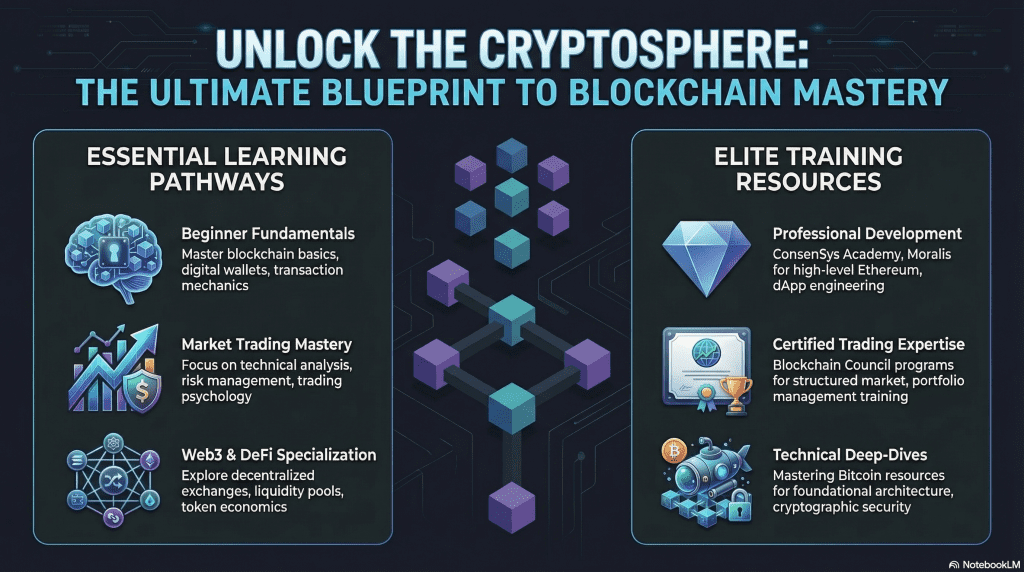
Introduction to Digital Currencies – Moralis
This course introduces the broader digital currency ecosystem, including stablecoins, blockchain networks, and Web3 applications. The focus is on explaining how cryptocurrencies interact with modern digital economies.
Topics often include:
- Blockchain use cases
- Digital asset ecosystems
- The role of decentralized networks in finance
For beginners who want a general overview of cryptocurrency systems beyond Bitcoin alone, this type of course can provide useful context.
Beginner courses help learners build a foundation before exploring more specialized areas such as trading strategies, blockchain development, or decentralized finance. In most cases, starting with a clear understanding of blockchain fundamentals makes it easier to evaluate more advanced topics later.

Best Courses for Crypto Trading
While some courses focus on blockchain fundamentals, others are designed specifically for people who want to understand cryptocurrency markets and trading strategies. These programs typically emphasize technical analysis, market psychology, and risk management.
For beginners interested in trading, the goal is not simply to learn how to place orders on an exchange, but to understand how traders analyze price movements and manage risk.
Certified Cryptocurrency Trader – Blockchain Council
This certification program focuses on cryptocurrency trading strategies and market analysis. It introduces learners to core trading concepts that are commonly used in financial markets.
Typical subjects include:
- Technical indicators and chart analysis
- Portfolio management strategies
- Risk control and position sizing
- Market behavior and trading psychology
The course is designed for learners who want a structured introduction to trading concepts rather than relying only on informal tutorials.
Cryptocurrency Trading Courses – Udemy
Udemy hosts a wide range of crypto trading courses created by independent instructors. Many programs focus on beginner-friendly explanations of trading charts, indicators, and order types.
Common topics include:
- Reading candlestick charts
- Using technical indicators such as RSI or moving averages
- Understanding support and resistance levels
- Basic trading strategies for volatile markets
Because the platform contains many different courses, learners should review instructor credentials and course ratings before enrolling.
Market Analysis Resources – TradingView
Although not a traditional course provider, TradingView offers educational resources and tutorials that help traders learn how to interpret price charts and technical indicators.
These materials often cover:
- Chart patterns and trend analysis
- Technical indicator explanations
- Market sentiment tools
For traders who want to improve their chart-reading skills, these resources can complement more structured courses.
Trading courses are most effective when combined with practical experience. Many learners begin with theoretical lessons and then gradually apply what they learn through small trades and market observation.
Understanding risk management, market behavior, and trading discipline is often just as important as learning technical indicators or trading strategies.

Best Courses for Blockchain Development
For learners interested in building applications on blockchain networks, development-focused courses provide a deeper and more technical path into the crypto ecosystem. These programs typically require some familiarity with programming concepts and focus on creating smart contracts or decentralized applications.
Blockchain Developer Program – ConsenSys Academy
ConsenSys Academy offers training programs designed for developers who want to build applications on Ethereum and other blockchain networks. The curriculum focuses on the technical skills required to create decentralized applications (dApps) and smart contracts.
Common topics include:
- Smart contract development using Solidity
- Ethereum development tools and frameworks
- Building and deploying decentralized applications
- Security considerations in blockchain development
Because the program includes practical exercises and projects, it is often used by developers transitioning into Web3-related roles.
Web3 Development Courses – Moralis
Moralis provides developer-oriented courses that teach how to build blockchain applications using modern Web3 tools. These programs focus on integrating blockchain functionality into web-based applications.
Typical subjects include:
- Connecting front-end applications to blockchain networks
- Working with Web3 APIs and developer tools
- Creating token-based applications
- Interacting with smart contracts through user interfaces
These courses are particularly useful for developers who already have experience with web development and want to expand into blockchain-based systems.
Technical Blockchain Resources – Andreas M. Antonopoulos
Many developers studying blockchain also rely on educational materials created by Andreas Antonopoulos. His book Mastering Bitcoin and related learning resources provide detailed explanations of Bitcoin’s underlying technology.
Topics explored in these materials include:
- Blockchain architecture
- Bitcoin network operations
- Security principles in decentralized systems
- Cryptographic foundations of blockchain technology
These resources are often recommended for learners who want a deeper technical understanding of how blockchain networks function.
Blockchain development courses require more time and technical effort than beginner-level crypto education. However, they can open pathways to careers in Web3 development, smart contract engineering, and decentralized application design.

How to Choose the Right Crypto Course
With so many crypto courses available online, selecting the right one depends largely on your learning goals and experience level. Rather than choosing the most popular course or the one with the highest price tag, it is often more helpful to focus on what skills you want to develop.
Identify Your Learning Objective
The first step is to clarify why you want to study cryptocurrency. Different courses serve different purposes.
For example:
- If you want to understand how cryptocurrency works, a beginner blockchain course is usually the best starting point.
- If your goal is to actively trade digital assets, a trading-focused course that covers technical analysis and risk management may be more useful.
- If you want to build decentralized applications, you will likely need a blockchain development course that includes programming and smart contract training.
Knowing your objective helps narrow down the many available options.
Consider Your Technical Background
Some crypto courses are designed for complete beginners, while others assume prior knowledge of programming or finance.
Before enrolling, review the course requirements to ensure it matches your current skill level. Starting with a course that is too advanced can make the learning process unnecessarily difficult.
Evaluate the Course Structure
A well-structured course should clearly outline its curriculum and learning outcomes. Look for programs that provide:
- A clear sequence of lessons
- Practical demonstrations or exercises
- Supporting resources such as documentation or community discussion
Courses that only offer short videos without deeper explanations may not provide enough depth for long-term learning.
Compare Free and Paid Options
Many high-quality introductory courses are available for free. These can be an excellent way to explore the basics before investing in more advanced training.
Paid courses may offer additional benefits such as certifications, mentorship, structured projects, or community support. Whether a paid course is worthwhile often depends on the depth of instruction and the learner’s specific goals.
Look for Up-to-Date Content
Because cryptocurrency technology evolves quickly, it is important to choose courses that are regularly updated. A course that reflects current tools, networks, and best practices will be more useful than one based on outdated material.
Choosing a crypto course carefully can make learning more efficient and reduce confusion. By focusing on your goals, skill level, and the course structure, you can select a program that provides meaningful value rather than simply adding to the growing amount of information available online.
Conclusion
Learning about cryptocurrency can feel overwhelming at first, especially because the ecosystem includes many different areas such as blockchain technology, trading, decentralized finance, and Web3 development. Online courses can provide a structured way to explore these topics and build a clearer understanding of how the technology works.
For beginners, introductory courses that explain blockchain fundamentals and digital asset concepts are usually the best starting point. From there, learners may choose to explore more specialized subjects such as trading strategies, smart contract development, or decentralized finance.
The most effective learning path often combines several approaches. Courses can provide structured explanations, while additional resources such as documentation, articles, and hands-on experimentation help reinforce what you learn.
As the cryptocurrency industry continues to evolve, ongoing education becomes increasingly valuable. Whether your goal is to understand blockchain technology, participate in cryptocurrency markets, or explore Web3 development, choosing the right course can help make the learning process more organized and productive.

Frequently Asked Questions (FAQs)
Are online crypto courses worth taking?
They can be useful if they provide structured explanations and practical learning. A well-designed course can help organize complex topics such as blockchain technology, trading strategies, or smart contract development into a clear learning path.
However, learners should evaluate course content carefully, since the quality of available courses can vary significantly.
How long does it take to complete a crypto course?
The time required depends on the course depth and format. Introductory courses may take only a few hours to complete, while certification programs or developer bootcamps can require several weeks or months of study.
Many online courses are self-paced, allowing learners to progress according to their own schedules.
Are free crypto courses good enough for beginners?
In many cases, yes. Free courses offered by reputable platforms can provide a solid introduction to cryptocurrency fundamentals. These courses often cover topics such as blockchain basics, wallets, and how transactions work.
Learners who want deeper technical training or specialized skills may later choose more advanced paid courses.
Do I need a technical background to take a crypto course?
No. Many beginner courses are designed for people with no prior technical knowledge. They focus on explaining core ideas in accessible language.
More advanced courses, especially those related to blockchain development, may require familiarity with programming or computer science concepts.
Can crypto courses help with career opportunities?
Some courses, particularly those focused on blockchain development or Web3 technologies, may help learners develop skills relevant to emerging roles in the cryptocurrency industry.
However, practical experience, projects, and continued learning are often just as important as course certificates when pursuing opportunities in the field.
What should I look for before enrolling in a course?
Before choosing a course, it is helpful to review:
- The curriculum and topics covered
- The experience of the instructor or organization
- Reviews from previous learners
- Whether the course includes practical exercises or projects
Carefully reviewing these factors can help ensure that the course aligns with your learning goals.
1 thought on “Best Online Crypto Courses: Beginner to Advanced”